At the Government Primary School, Panjim Centre, Goa, a simple classroom activity led to a deep and unexpected change; not just in children, but in adults too.
The school has been implementing Mulyavardhan activities since 2018 across both Marathi and Konkani medium sections. In the academic year 2025–26, these activities began once again from June with great enthusiasm.
Among the teachers leading these sessions was Ms. Sneha Chopde, who teaches Grade 2 in the Konkani medium section. Her classroom has 10 students, most of whom come from migrant families. Many parents work at construction sites. Hindi is commonly spoken at home.
Despite the language barrier at school, these children are full of curiosity, energy, and a willingness to learn.
Learning Through Simple Activities
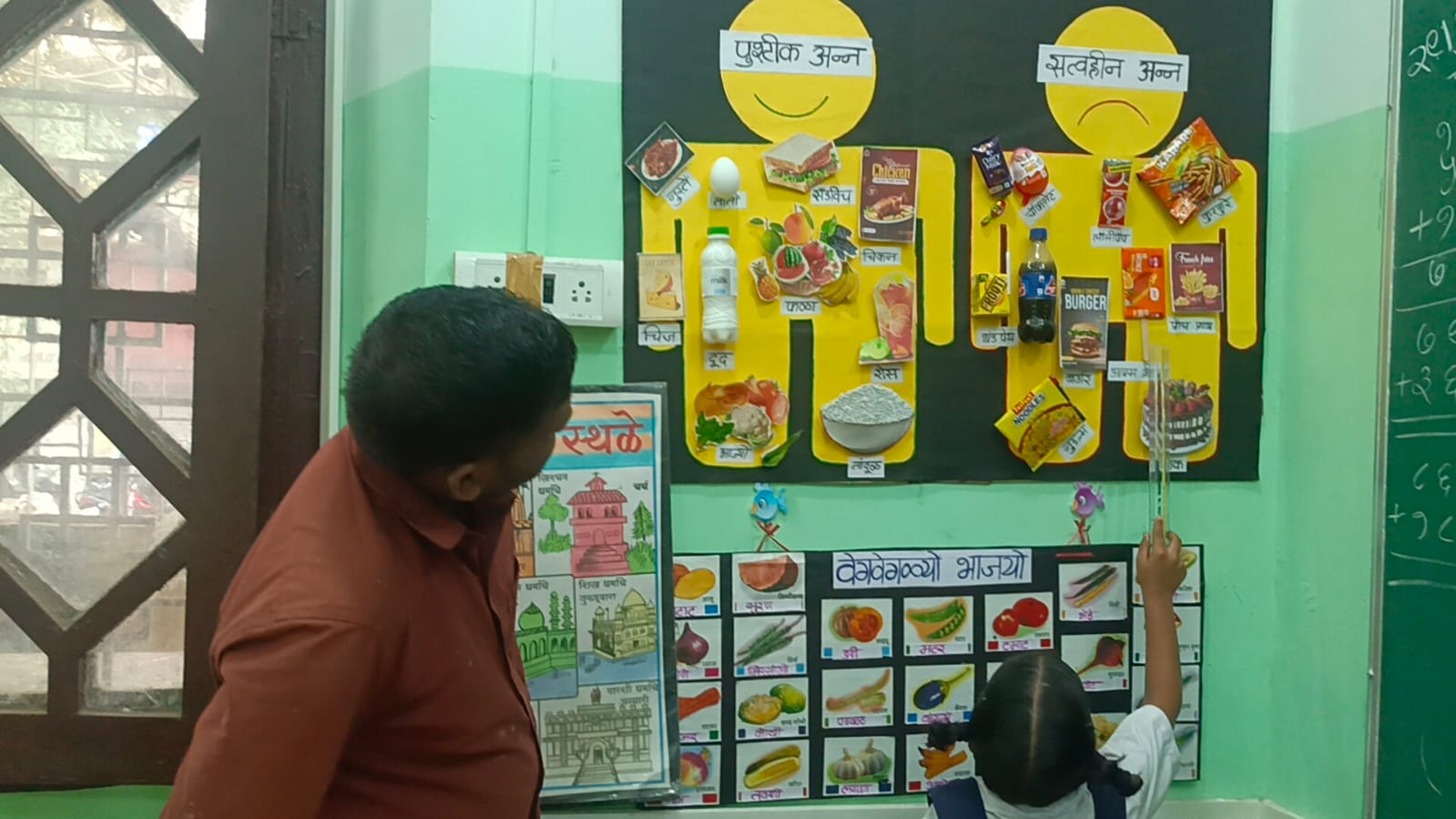
One day, as part of the Mulyavardhan programme, Ms. Sneha conducted an activity on “Healthy Food.”
Using colourful charts and pictures, she spoke to the children about healthy and unhealthy eating habits. The session was interactive and joyful. Children eagerly identified food items, shared their thoughts, and participated with excitement.
For many students, this was the first time they understood the difference between nutritious food and junk food in a simple and relatable way.
“But Chocolates Are Unhealthy!”
A few days later, the school celebrated a student’s birthday. Like every celebration, chocolates were distributed among the children.
But this time, something different happened.
As soon as the chocolates reached them, a few students looked at their teacher and said,
“Teacher, how can we eat chocolates? They are unhealthy food!”
That one sentence left everyone surprised.
The children had not only participated in the activity; they had grasped its learning.
Seeing this response, Ms. Sneha immediately decided to collect chocolates and distribute fruits instead. The children happily accepted the fruits and enjoyed the celebration together.
Values That Stay Beyond the Classroom
For Ms. Sneha, this was an important turning point.
As she shares, at the beginning of the year, many children were not even aware of what healthy and unhealthy food meant. But through Mulyavardhan activities, she could clearly see changes in their thinking and behaviour.
According to her, the Mulyavardhan books make learning easy and engaging for children. The simple language, attractive illustrations, and activity-based approach help students understand concepts naturally. The books also encourage pair and group learning, giving every child an equal opportunity to participate.
Beyond academics, children begin learning importantsocial, emotional, and ethical competencies like sharing, cooperation, empathy, equality, and emotional awareness.
When Children Inspire Adults
The impact of this experience did not stop with the students.
Inspired by the children’s awareness, Ms. Sneha decided to stop distributing chocolates during school celebrations. Instead, she now prepares homemade sweets and healthier alternatives for students.
What began as a small classroom activity quietly transformed everyday habits and choices.
This experience shows that when children learn through meaningful and joyful activities, values become a part of their daily lives. And sometimes, these children go on to inspire the adults around them too.
Taluka Coordinator: Gayatri Das