Brief reports on programme milestones and key events
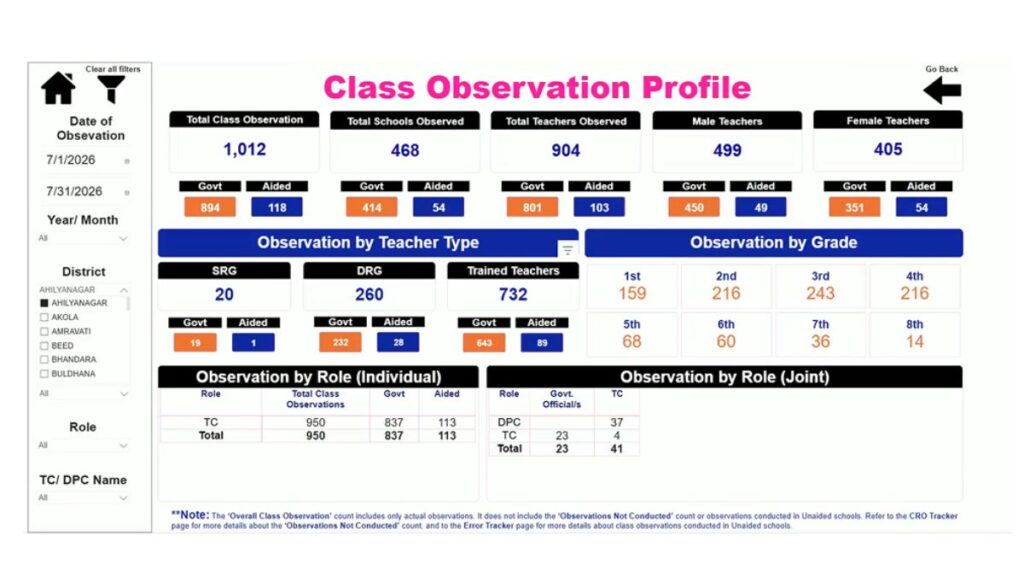
What Are Ongoing Classroom Observations Telling Us About Mulyavardhan?
Classroom observations are a regular part of Mulyavardhan’s monitoring and support processes. Conducted by SMF Taluka Coordinators, District Programme Coordinators and Master Trainers, along with Kendrapramukhs, DIET faculty and Education Department officials, these observations help understand programme implementation, support teachers in strengthening classroom practices, and identify areas for further improvement.
During the first quarter of the 2026-27 academic year, 44,369 classroom observations were conducted across Maharashtra, covering 31,538 teachers. The findings presented here provide a snapshot of implementation trends from July to September 2026.
The evidence from this quarter points to encouraging levels of teacher adoption of Mulyavardhan activities and active student participation. At the same time, it highlights specific areas where continued teacher support and strengthening of classroom practices can further enhance implementation quality.
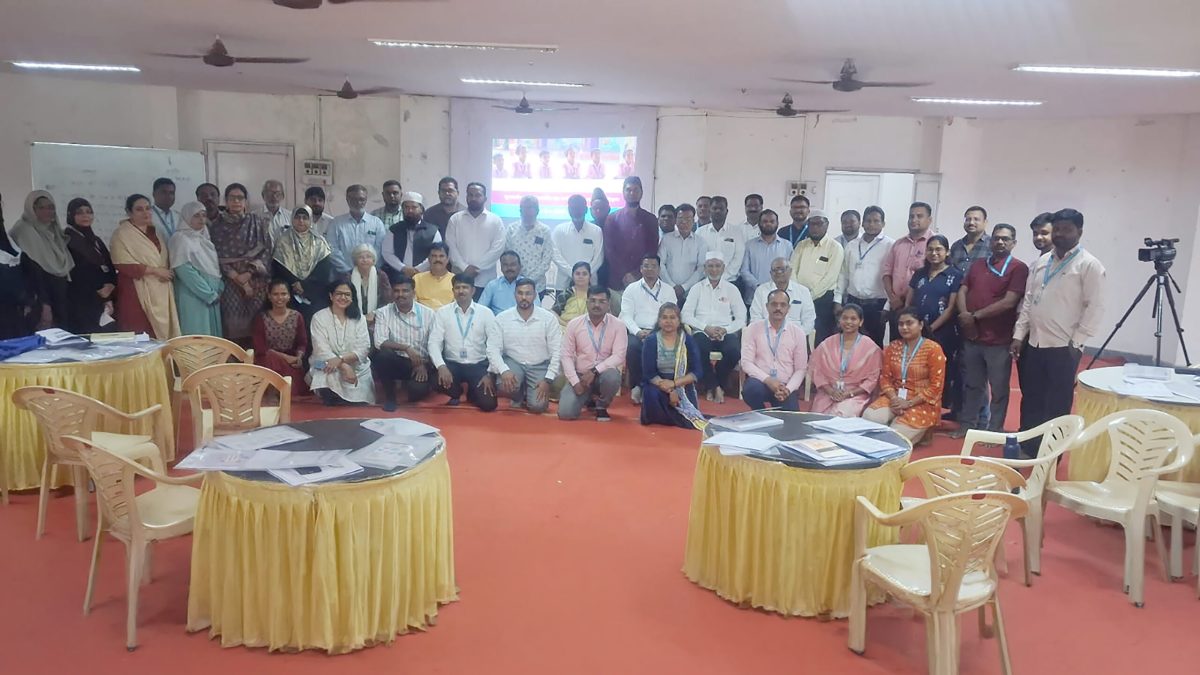
Mulyavardhan Urdu State-Level MRP Training Held in Pune
The five-day residential training for Mulyavardhan Urdu State-Level Master Resource Persons (MRPs) was conducted from 5 to 9 October 2026 at the Wagholi Educational Rehabilitation Centre (WERC), Wagholi, Pune.
The training brought together 32 experienced teachers and resource persons from across Maharashtra who were nominated by SCERT, Maharashtra, as State-Level MRPs. The programme strengthened their understanding of Mulyavardhan and prepared them for their role in supporting its implementation in Urdu-medium schools.
The sessions were facilitated by the Master Trainers (MTs) of the Shantilal Muttha Foundation (SMF) through interactive and practical learning activities.
The training formed an important part of the cascade training model planned to reach approximately 27,000 teachers across the state. The trained MRPs will support around 500 State Resource Group (SRG) members from 36 districts, who will further facilitate teacher training in Urdu-medium schools.
The inaugural session was attended by:
The training brought together experienced educators with a shared commitment to strengthening values-based learning in Urdu-medium classrooms. It marked an important step towards building a strong network of resource persons who will support the effective implementation and scale-up of Mulyavardhan across Maharashtra.
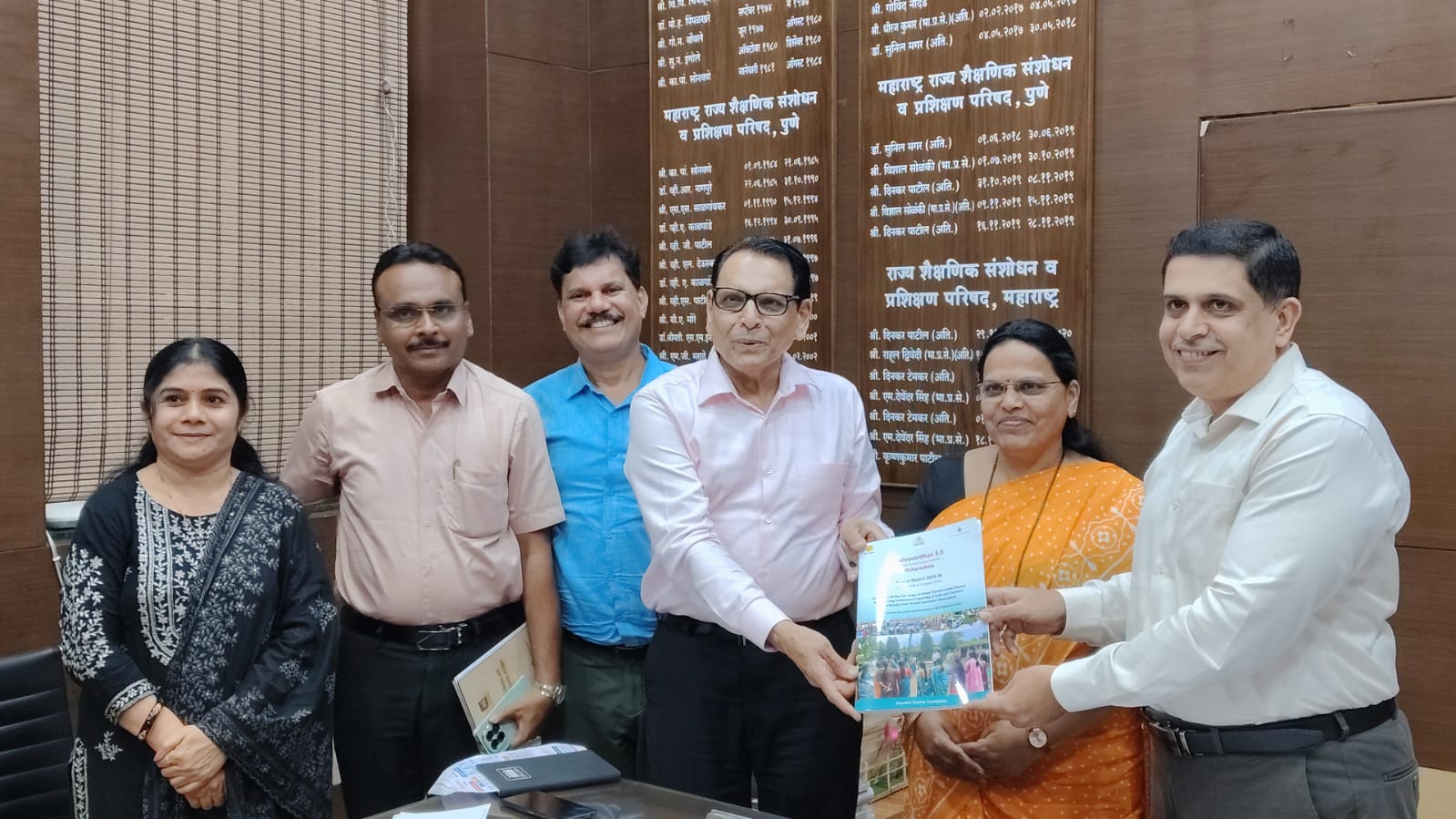
Meeting with SCERT Director on Mulyavardhan
On 24 September 2026, Shantilal Muttha Foundation had the opportunity to meet Shri Mangesh Joshi, IAS, the newly appointed Director of SCERT Maharashtra, to discuss the progress, implementation, and future roadmap of Mulyavardhan, our school-based value education programme.
The conversation reflected a shared commitment to nurturing constitutional, social, emotional, and ethical values among children through schools. We are encouraged by the positive support extended towards further strengthening the programme’s reach and impact across Maharashtra.
Exploring opportunities for collaboration with UNICEF Maharashtra
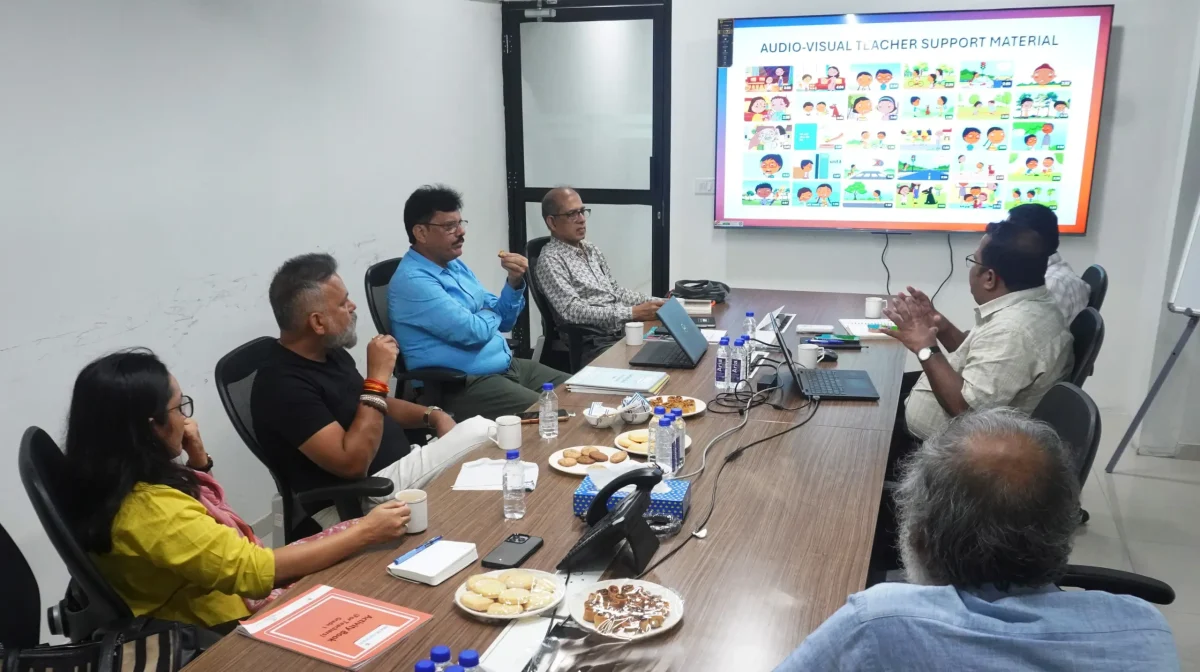
Shantilal Muttha Foundation was delighted to host Shri Sanjay Singh, Chief, UNICEF Maharashtra, and Ms Shikha Rana, Education Lead, on 18 September 2026 in Pune.
The meeting included a presentation on the Mulyavardhan programme and discussions on potential areas of synergy for future joint initiatives.
SBI Foundation Visits Mulyavardhan 3.0 in Sangli District
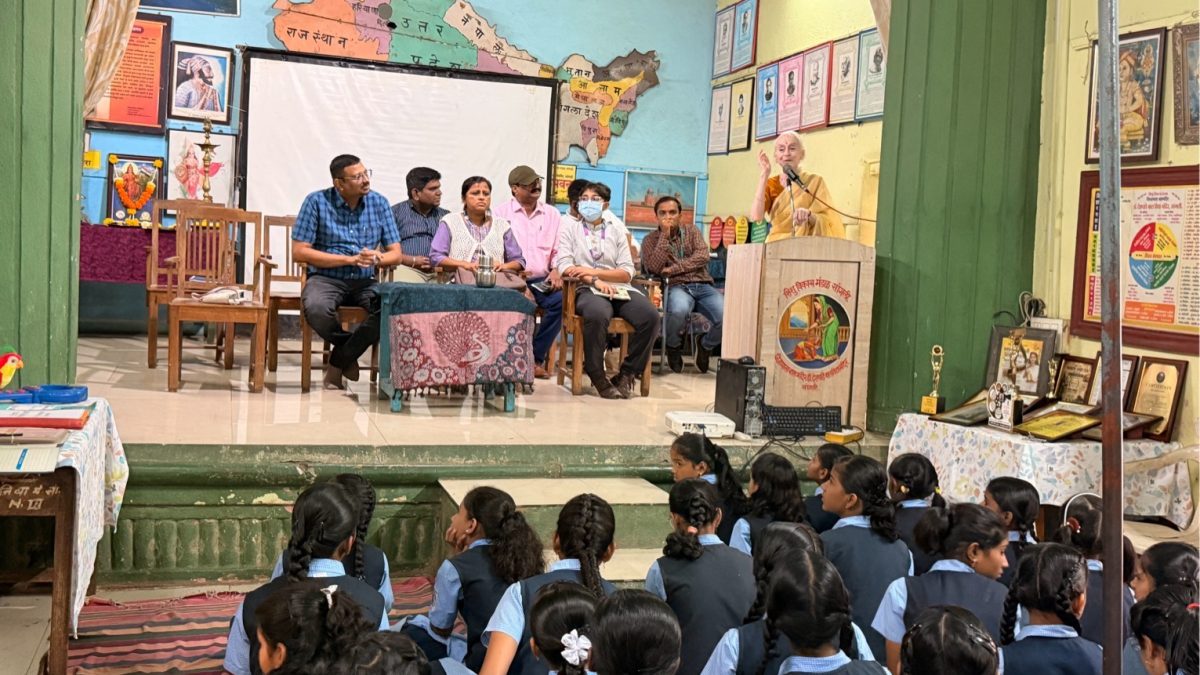
Shantilal Muttha Foundation recently hosted Anwesha Saha, Assistant Manager, Integrated Learning Mission (ILM), SBI Foundation, for a two-day field visit to review the implementation of Mulyavardhan 3.0 in Sangli district, Maharashtra, with support from SBI Foundation.
The visit began with interactions with the SMF leadership and programme team, providing an overview of the programme’s objectives, progress, and implementation approach. This was followed by field visits to schools in Sangli district where Ms. Saha engaged with DIET officials, school leaders, teachers, and students.
Classroom observations and stakeholder interactions offered an opportunity to understand how Mulyavardhan 3.0 is being implemented at the school level. The visit also enabled meaningful dialogue on achievements, challenges, and opportunities for strengthening programme delivery.
The SMF team expressed its gratitude to SBI Foundation for its continued support and partnership in advancing quality, values-based education across Maharashtra.
The team also acknowledged the contributions of several education leaders and practitioners whose cooperation helped make the visit successful, including Vikas Sargar, DIET Principal; Renuka Jadhav, DIET Lecturer; Dr. Lata Deshpande, President, Dr. Deshpande Bal Mandir, Sangli; Vasant Shingare, In-charge Cluster Head, Zilla Parishad School, Kasegaon No. 1; Vikas Jadhav, Cluster Head, Kasegaon; Ramesh Chavan, Headmaster, Zilla Parishad School, Kasegaon No. 2; and Sunil Ambi, Block Education Officer, Walwa Panchayat Samiti, Islampur.
The visit reaffirmed the importance of collaborative partnerships among schools, education officials, and development partners in fostering meaningful learning experiences for children.
Mulyavardhan Classroom Observations Across Maharashtra – August 2026
In August 2026, Shantilal Muttha Foundation (SMF) conducted classroom observations across all 36 districts and 407 blocks in Maharashtra, covering 8,470 schools, including 84% government and 16% aided schools. A total of 14,695 classrooms and 13,598 teachers were observed through this collaborative effort involving SMF’s Taluka Coordinators, District Programme Coordinators, Master Trainers, Kendra Pramukhs, DIET officials and education department officials.
These observations help understand how Mulyavardhan is being implemented in classrooms, support teachers, recognise exemplary practices and identify opportunities for continuous improvement. Technology-enabled data collection and digital analysis further help generate timely insights and strengthen data-driven decision-making.
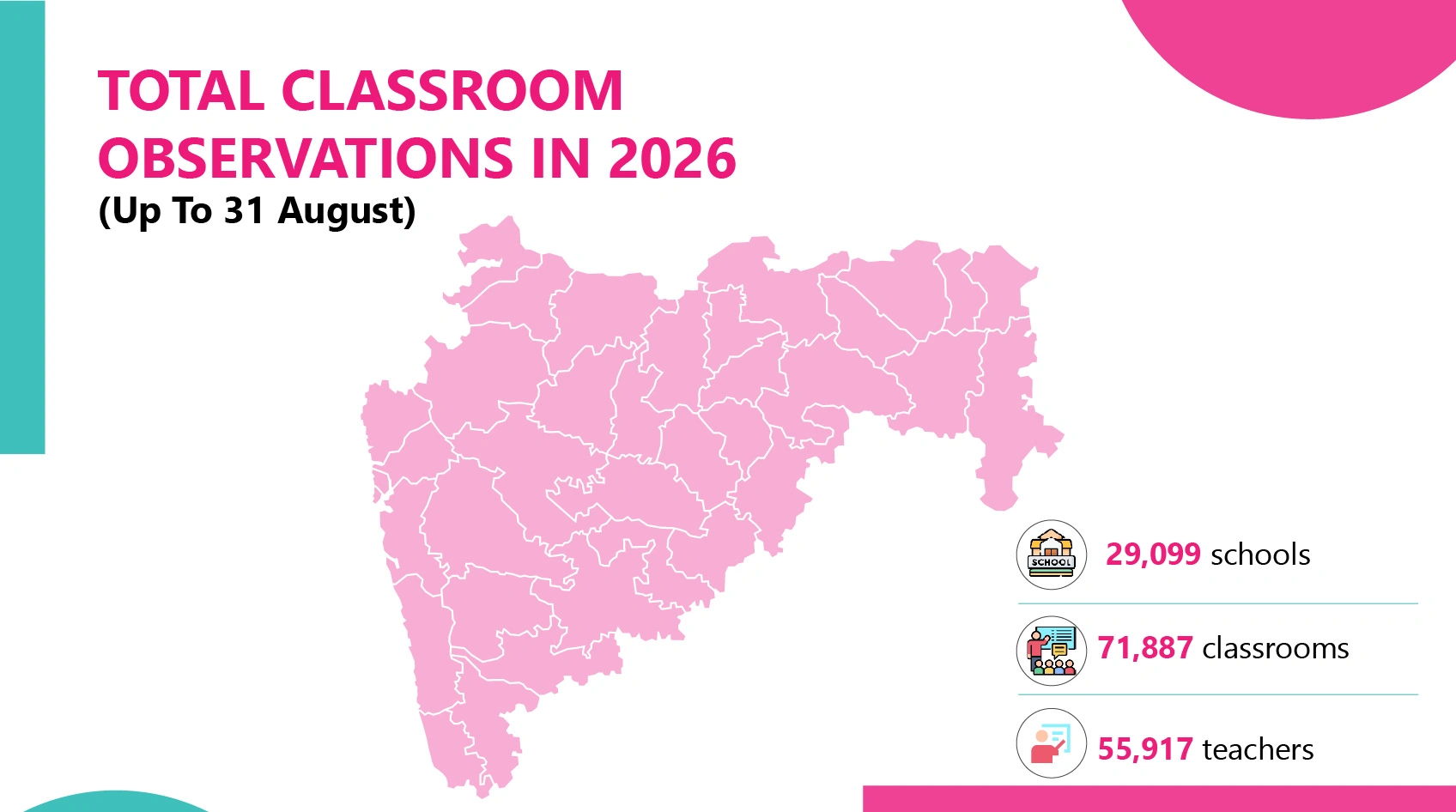
From January to August 2026, Mulyavardhan classroom observations reached 29,099 schools, covering 71,887 classrooms and 55,917 teachers; continuing SMF’s efforts to enable meaningful value education across Maharashtra.