In Chikhali block of Jalna district, disposable plastic plates had become a common sight at village functions and community celebrations. After every event, piles of used plates were left scattered in open spaces. Some were burned, polluting the air with toxic smoke, while others remained in the soil for years, harming the environment. Regular use of plastic plates also poses serious health risks over time.
For most people, this has become a normal part of life. But one classroom discussion changed everything.
When Children Started Asking Questions
During a Mulyavardhan session, Mr. Vinod Pandey, a teacher at Z.P. Primary School Chandai, Thombri, Jalna, introduced the topic of plastic pollution to his students of grade 3. As part of the activity, students observed their surroundings and noted where plastic was being used unnecessarily.
The next day, the classroom was full of ideas. Children shared what they had seen in their homes, streets and village. They also suggested simple ways to reduce plastic use.
Listening to them, Mr. Pandey realised that this learning should not remain inside the classroom. It was an opportunity to bring the entire community together for a meaningful change.
Turning Learning into Action
Mr. Pandey, along with fellow teachers and students, started a village-wide awareness campaign.
Students from different classes were given responsibility for different parts of the village. They visited homes, spoke to villagers, explained the harmful effects of single-use plastic and encouraged people to use steel plates or other eco-friendly alternatives during community programmes.
The message reached many people; but there was one challenge. Most villagers agreed with the idea but felt that buying hundreds of steel plates for social events would be too expensive.
Leading by Example
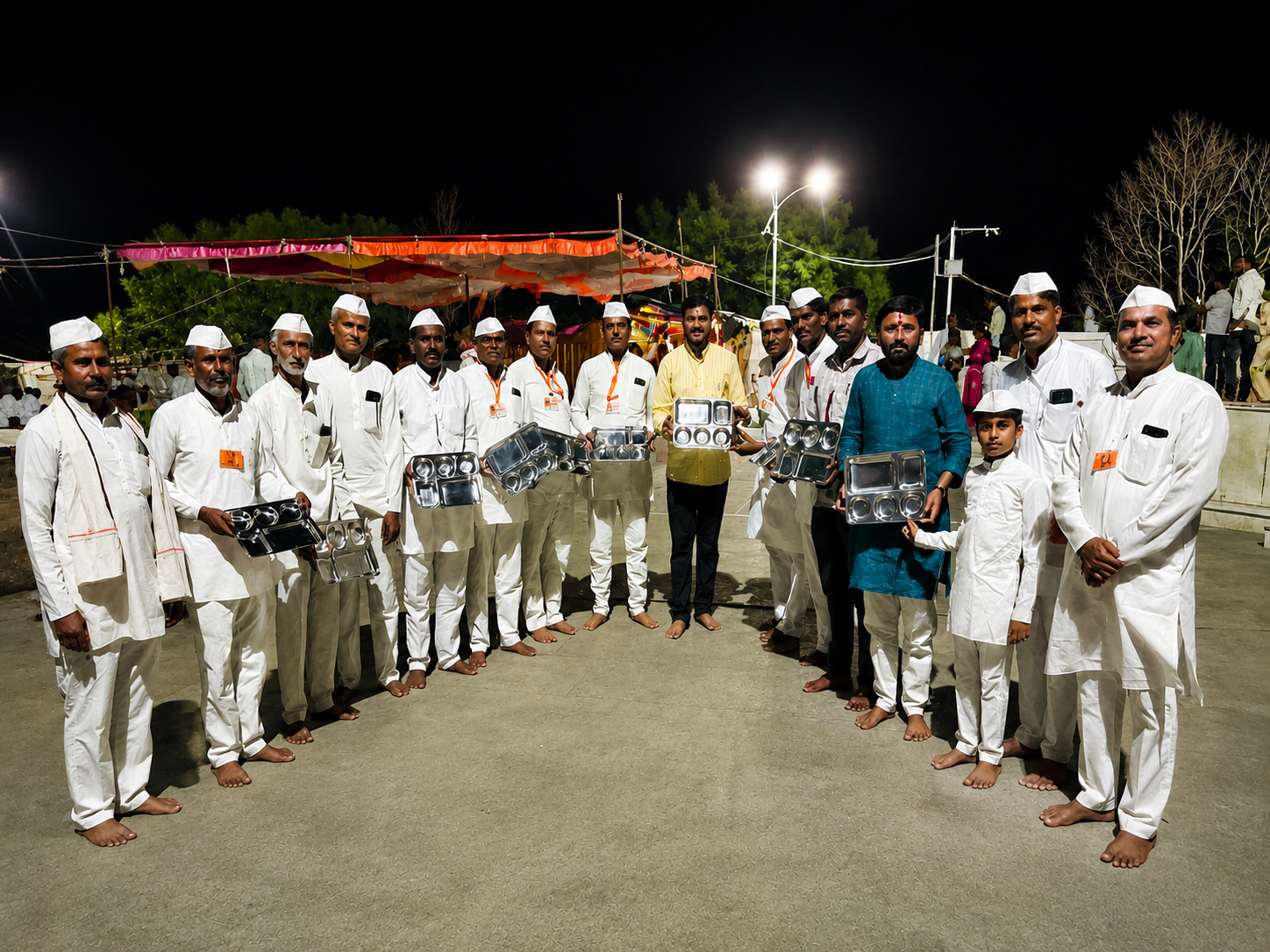
Instead of giving up, Mr. Pandey decided to remove the biggest obstacle himself. Using his own savings, he purchased 500 steel plates and made them available free of cost for village functions. Soon, another concern surfaced.
“Who will wash all these plates after the programme?”
Once again, Mr. Pandey and his students of grade 3 stepped forward. They willingly took responsibility for cleaning the plates after community events. Their dedication inspired other teachers, school staff and local volunteers to join them. Slowly, what began as one teacher’s effort became a collective community movement.
A Change That Spread Beyond One Village
As more people embraced the idea, the use of disposable plastic plates reduced significantly. The village dump yard became visibly cleaner, and people began choosing reusable alternatives without hesitation.
Most importantly, attitudes have changed. Villagers no longer saw avoiding plastic as an inconvenience; they began seeing it as a shared responsibility.
The impact of this initiative soon travelled beyond Chikhali. Neighbouring villages like Chanegaon, Chandai and Umarkhed also adopted similar practices, proving that meaningful change can spread when people lead by example.
The Power of Mulyavardhan
Reflecting on this journey, Mr. Vinod Pandey shares:
“My dream is to build a society filled with positivity and a strong sense of togetherness. The Mulyavardhan programme by Shantilal Muttha Foundation is helping us move towards that dream. Through Mulyavardhan activities on cleanliness, caring for trees, animals and birds, children are becoming more responsible towards themselves, society and the environment. I sincerely thank Mulyavardhan for creating this positive change.”
Mr. Pandey’s story reminds us that values become meaningful only when they are lived. Sometimes, all it takes is one thoughtful classroom discussion, one committed teacher and a group of inspired children to spark a movement that transforms an entire community.