
In Grade 5 Mathematics at Shri Aatm Vallabh Jain Public Senior Secondary School, Sri Ganganagar, Rajasthan, Ms. Komal Kashyap noticed a common classroom pattern. A few confident students answered quickly, while many others stayed silent, copied solutions, or waited for the teacher to provide the method. Some children even lost interest when new concepts were introduced.
She began wondering: How can every child get a chance to think, discuss, and explain their ideas in Mathematics?
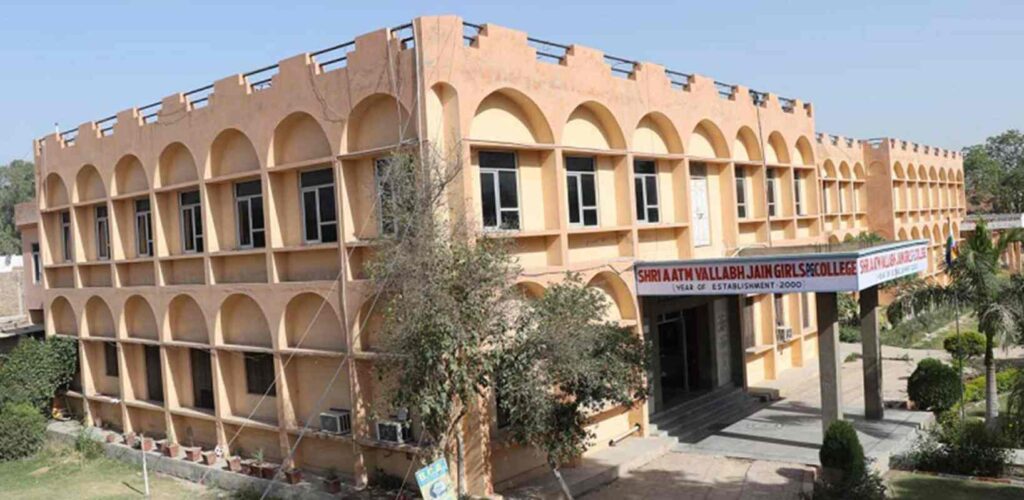
Shri Aatm Vallabh Jain Public Senior Secondary School, Sri Ganganagar, Rajasthan.
A small change in the order of teaching
Ms. Komal did not begin by demonstrating the conventional multiplication method. Instead, she gave the children a problem and asked them to solve it with a partner or in a small group.
As they worked, she moved around, listened to their conversations, and invited a few pairs to explain how they had arrived at their answers.
The shift was simple: the problem came before the method. Children first explored, discussed, and compared strategies before the teacher introduced or consolidated the formal procedure.
Her message was simple: “Try it together, figure it out, and tell each other how you solved it.” These were the classroom moments that made the difference.
Children compared strategies: repeated addition, breaking numbers into parts, using known multiplication facts. They discovered something no board explanation can give you: one problem can have many roads to the same answer.
While working on a multiplication problem such as 24 × 6, one student found it easier to separate the number into tens and ones. He explained his thinking as:
(20 × 6) + (4 × 6) = 120 + 24 = 144
When he explained the steps to his partner, the strategy became easier for other children to follow. Ms. Komal used the child’s method to discuss why the multiplication worked, rather than treating it only as a procedure to memorise.
What was visible in the classroom was a child explaining a mathematical strategy, another child listening and responding, and the teacher using that student-generated idea to extend the discussion.
In another pair, children used pencils and erasers available on their desks. They arranged them in equal rows and columns—for example, four rows of six—to represent 4 × 6.
The arrangement gave them something concrete to point to while explaining their thinking. Multiplication was no longer only numbers on the board; the children could see equal groups and connect them with repeated addition.
Ms. Komal encouraged children to use simple objects around them when a multiplication problem was difficult to visualise.
What the teacher began to notice
The most visible change was participation. Children who had rarely spoken during Mathematics began explaining steps to their partners and, at times, correcting or building on each other’s ideas. The Principal also observed quieter children getting opportunities to speak, explain their thinking, and learn from peers.
Ms. Komal noticed practical changes too:
When Maths learned to talk
The Mathematics methods themselves were not prescribed by Mulyavardhan. What transferred from the programme was the classroom structure: give children thinking time, let them discuss with a partner, listen to their reasoning, and then invite them to share.
This case shows how a teacher can take a pedagogical practice learned in one context and adapt it to another subject. The important shift was not a new Mathematics technique but creating more opportunities for children to make their thinking visible.
Try it in your classroom
What this case does—and does not—claim
This is a classroom case study, not a controlled study of learning outcomes. The evidence described here supports changes in participation, peer explanation and the variety of strategies children used or discussed. It does not, by itself, establish that Pair–Discuss–Share caused an increase in Mathematics achievement.
The practical insight is simpler: when children are given structured opportunities to explain their thinking to one another, the teacher gets to hear more of the thinking that is normally hidden.
Stakeholder Voices: In Their Own Words
Ms. Komal set out to teach multiplication. In the process, she also created opportunities for children to teach one another.
Her own reflection says it best:
“Earlier, I felt that I had to explain every concept myself. Now, when students work in pairs, they explain concepts to each other in their own ways. Sometimes they use stories, drawings and examples from everyday life, and their ideas give me new ways of thinking about how to teach Mathematics.”
Ms. Komal Kashyap, Mathematics Teacher, Grade 5
The school’s Principal, Mrs. Mamta Arora, saw it on a classroom visit:
“Even the quieter children were getting opportunities to speak, explain their thinking, and learn from their peers…The students were taking greater responsibility for their learning.”
Mrs. Mamta Arora, Principal
The lesson behind the lesson
The next time you walk past a Mathematics classroom, listen. If only one voice is doing the explaining, there may be many ideas left unheard. If the room is filled with small, purposeful conversations about how and why an answer works, Mathematics may have started to talk.